Every expanding business eventually reaches a critical juncture where operational growth demands additional physical assets. Whether scaling a construction enterprise, managing complex industrial projects, or expanding commercial hospitality operations, executive leadership must determine the most effective method for acquiring heavy machinery, specialized vehicles, and site utility infrastructure. The decision to commit capital toward outright purchasing versus opting for ongoing operational leasing carries profound long-term implications for corporate balance sheets, cash flow stability, and net profit margins.
Making the optimal choice requires a thorough examination of total cost of ownership, capital efficiency, market volatility, and tax optimization. Many business leaders mistakenly view asset acquisition purely through the lens of short-term cash outlays, failing to account for hidden expenditures such as depreciation, ongoing maintenance, storage logistics, and technology obsolescence. By evaluating both paths through a rigorous financial lens, decision-makers can establish an asset management framework that maximizes profitability while minimizing operational risk.
The Financial Dynamics of Capital Expenditure versus Operational Spending
Capital Conservation and Cash Flow Preservation
Retaining liquid capital gives growing organizations a distinct competitive advantage in unpredictable markets. When a company chooses to buy heavy machinery or specialized equipment outright, it locks up valuable capital that could otherwise fund revenue-generating activities, strategic acquisitions, or emergency reserves. Opting for temporary equipment rentals allows business managers to transform large, upfront capital expenditures into predictable, manageable operational expenses that align directly with specific project revenue cycles.
Preserving liquidity through short-term agreements ensures that corporate credit lines remain open for strategic expansions or unexpected market opportunities. This flexibility is particularly vital for small to mid-sized contractors and service providers who need to scale operations rapidly without overextending their balance sheets. By paying only for the duration an asset is actively generating revenue on a job site, companies maintain optimal working capital ratios.
Depreciation Realities and Market Value Decay
Owned physical assets begin losing market value the moment they leave the dealer lot. Over time, physical wear, age, and continuous advances in engineering cause significant value loss, leaving businesses with assets worth a fraction of their original purchase price. Companies that rely heavily on permanent acquisitions must absorb these depreciation losses on their corporate balance sheets, which directly impacts overall enterprise valuation.
Leasing eliminates the risk of asset devaluation for the end user. When a project concludes, the asset is simply returned to the supplier, shifting the financial burden of market depreciation and resale logistics entirely onto the rental provider. This structure protects operating margins from unexpected swings in secondhand equipment values and secondary market downturns.
Tax Advantages and Balance Sheet Management
Tax considerations play a pivotal role in deciding between short-term leasing and full asset ownership. In many jurisdictions, full rental payments can be deducted as direct operating expenses within the year they occur, providing immediate tax relief and lowering net taxable income. This straightforward accounting treatment avoids the multi-year tax depreciation schedules required when purchasing heavy capital assets.
Maintaining a lean balance sheet by limiting owned debt-financed assets improves key financial ratios, including return on assets and debt-to-equity metrics. Better financial ratios enhance a firm’s credit profile, making it easier to secure favorable financing terms for core business initiatives, facility expansions, or corporate acquisitions.
Assessing Total Cost of Ownership Across Asset Lifecycle
Uncovering Hidden Maintenance and Repair Liabilities
The initial purchase price of specialized machinery represents only a portion of its true lifetime expense. Owners are fully responsible for routine service schedules, emergency mechanical repairs, component replacements, and certified safety inspections. These ongoing maintenance costs steadily compound over the asset’s operational life, creating unpredictable cash outflows that can severely erode project profit margins.
Partnering with local equipment rental services transfers routine maintenance burdens, repair costs, and inspection liabilities to the service provider. Qualified rental vendors ensure that all machinery meets rigorous safety and performance standards before delivery, offering immediate replacement units if a breakdown occurs on-site to prevent costly operational downtime.
Storage, Transport, and Facility Overhead
Physical assets require secure storage space, weather-protected facilities, and dedicated transport logistics when they are not actively deployed. Maintaining sprawling equipment yards, hiring transport drivers, and maintaining a fleet of heavy delivery trailers generates substantial ongoing overhead that persists regardless of market conditions or current project volume.
Relying on specialized suppliers for project-based infrastructure eliminates long-term facility footprint requirements and transport headaches. For example, arranging a temporary trailer rental directly to a job site ensures that hauling logistics and spatial footprint costs are absorbed only for the active project duration, eliminating costly idle storage expenses between contracts.
Technology Obsolescence and Efficiency Losses
Rapid advances in engineering, telematics, and environmental efficiency mean that newly manufactured machinery is continuously cleaner, safer, and more fuel-efficient than older models. Companies that buy equipment often find themselves locked into outdated technology that increases operating costs and reduces competitive bidding advantages over time.
Renting provides immediate access to modern, high-tier machinery equipped with the latest safety features, GPS tracking, and fuel-efficient engines. Utilizing state-of-the-art equipment enhances job site productivity, helps satisfy strict client sustainability standards, and reduces site fuel expenses without requiring constant capital reinvestment.
Tactical Evaluation of Core Site and Heavy Equipment Categories
Heavy Machinery and Specialized Lifting Solutions
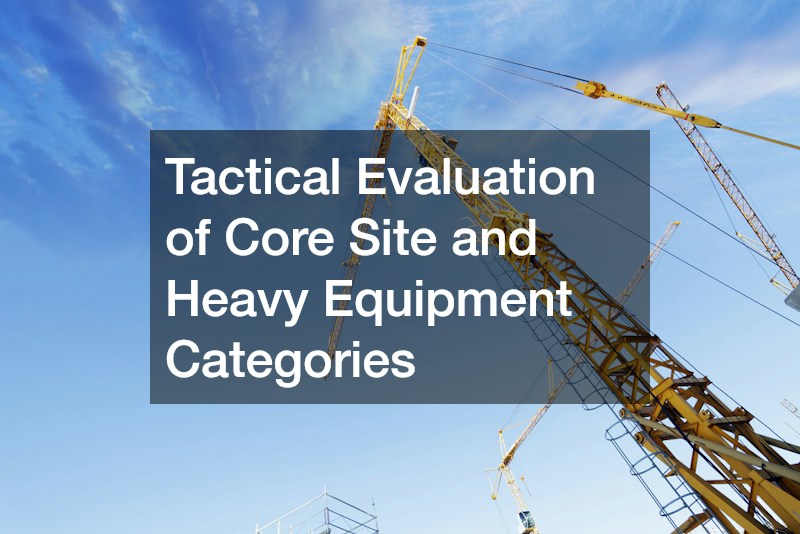
Executing large-scale structural building projects, civil engineering works, or industrial plant upgrades requires specialized heavy lifting power. Purchasing high-capacity lifting units involves massive capital commitments, specialized operator certifications, complex insurance coverage, and stringent annual safety compliance reviews.
- Secure high-capacity lift capabilities on a project-by-project basis to avoid permanent capital lockup.
- Eliminate the specialized maintenance, rigging checks, and liability insurance costs associated with permanent ownership.
- Ensure full operational flexibility by selecting exact boom lengths and weight capacities tailored precisely to specific structural requirements.
- Contracting specialized crane services provides access to modern lifting machinery accompanied by certified, highly trained operators, ensuring regulatory compliance and seamless job site safety.
Site Waste Management and Debris Logistics
Maintaining clean, hazard-free job sites is essential for regulatory compliance, worker safety, and operational efficiency across construction, renovation, and industrial operations. However, purchasing dedicated waste transport containers creates significant logistical challenges, as empty containers require massive storage yards and specialized heavy trucks for transportation.
- Renting specialized waste containers ensures smooth project waste removal scaled precisely to phase requirements.
- Avoid the long-term storage and hauling fleet overhead needed to support corporate-owned roll off containers.
- Standardize job site cleanup protocols by scheduling automated drop-off and pickup schedules aligned with project milestones.
- Partnering with a reliable local dumpster rental ensures prompt delivery, regulatory compliance with municipal waste codes, and seamless disposal management for project waste.
Portable Sanitation and Environmental Health Infrastructure
Providing clean, reliable sanitation infrastructure is a mandatory requirement for construction sites, commercial events, and remote industrial projects. Owning a private fleet of sanitation units requires dedicated service trucks, specialized pumping equipment, chemical inventory, and certified personnel to handle regular waste management and chemical servicing.
- Ensure full compliance with federal, state, and local occupational health standards without investing in specialized service vehicles.
- Outsource routine pumping, chemical recharging, deep cleaning, and sanitation maintenance to expert vendor teams.
- Scale site sanitation facilities up or down seamlessly based on fluctuating site worker numbers or event headcount.
- Securing a professional local dumpster rental along with a dedicated portable toilet rental provides a comprehensive site services package that keeps operations running cleanly and efficiently.
- Sourcing a modern portable toilet for remote or temporary work zones delivers immediate worker comfort while avoiding permanent plumbing installation costs.
Specialized Transport and Cold-Chain Logistics Solutions
Industries such as commercial catering, agricultural distribution, pharmaceuticals, and temporary event management frequently encounter sudden spikes in temperature-controlled transport needs. Purchasing specialized climate-controlled transport fleet vehicles requires high capital outlays, high insurance premiums, and specialized refrigeration technician maintenance.
- Expand logistics capacity during seasonal peak demand without carrying idle vehicle fleet overhead during off-peak months.
- Protect perishable inventory, food products, and sensitive biological materials with reliable, modern refrigeration technology.
- Select exact temperature ranges, spatial dimensions, and power configurations required for specific payload contracts.
- Utilizing temporary refrigerated trailer rentals allows businesses to expand cold-chain storage and delivery capabilities precisely when contracts demand it, preserving profit margins.
Risk Mitigation and Contractual Agility in Unstable Markets
Navigating Supply Chain Disruptions and Lead Times
Procuring brand-new commercial machinery directly from manufacturers often involves long lead times, production backlogs, and uncertain delivery schedules. When a firm wins a time-sensitive contract, waiting months for equipment factory deliveries can lead to missed deadlines, breach of contract penalties, and severe reputational damage.
- Bypassing manufacturer backlogs by leveraging existing vendor inventories allows project managers to mobilize job sites within days rather than months.
- Securing short-term equipment access ensures immediate execution of newly awarded client contracts without delaying project start dates.
- Eliminating supply chain uncertainty allows commercial enterprises to bid aggressively on fast-turnaround opportunities.
- Establishing primary vendor partnerships provides priority access to specialized machinery during peak construction cycles, ensuring uninterrupted project momentum.
Hedging Against Economic Cycles and Interest Rate Fluctuations
Economic volatility, rising interest rates, and shifting commercial lending terms make heavy corporate debt obligations increasingly dangerous. Taking on long-term capital loans during high-interest periods locks a business into expensive fixed monthly overhead that must be paid regardless of monthly revenue fluctuations.
- Shift financial commitments from rigid multi-year debt structures to flexible operational expenditures that can be terminated at the end of any contract.
- Protect corporate balance sheets from carrying high-interest debt loads during broader economic contractions or industry slowdowns.
- Reinvest conserved interest payments directly into high-return operational initiatives, sales expansion, or specialized talent acquisition.
- Utilizing project-based leasing allows leadership to scale down operational costs instantaneously when facing seasonal industry lulls or sudden market pullbacks.
Strategic Decision Matrix for Corporate Decision-Makers
Utilization Rate Thresholds and Profitability Benchmarks
Determining whether to lease or buy ultimately hinges on realistic asset utilization rates. If a specific piece of machinery will be deployed continuously across multiple back-to-back projects, ownership may offer a lower long-term cost per hour. However, if calculated annual utilization falls below threshold metrics, rental structures consistently deliver superior long-term profits.
Executives should calculate expected active field hours versus total non-productive hours spent in storage, transit, or maintenance workshops. Factor in the total cash outlay required for purchase, including financing interest, tax liabilities, and insurance. When continuous utilization cannot be guaranteed, opting for versatile equipment rentals protects operating capital from being trapped in idle assets.
Geographic Reach and Multi-Site Operations
Businesses operating across wide geographical regions face high logistical costs when moving heavy machinery between distant job sites. Interstate highway transport fees, permits, driver hours, and escort vehicles quickly eliminate the financial advantages of owning a centralized fleet of machinery.
By sourcing machinery regionally for each project site, multi-location operations eliminate heavy transit overhead and local regulatory compliance headaches. Establishing strong vendor networks for nationwide site needs—including regional dumpster rentals—allows operational managers to mobilize job sites quickly anywhere in the country with zero long-distance hauling overhead.
Managing Project Uncertainty and Market Volatility
Economic conditions, supply chain disruptions, and shifting client timelines can suddenly alter project scope and duration. Asset ownership creates rigid, fixed overhead structures that must be serviced regardless of corporate revenue flow, leaving companies vulnerable during market downturns or contract delays.
Leasing provides an essential financial buffer against economic instability. Should a contract be delayed, scaled back, or canceled, leased assets can be returned immediately, halting ongoing expenses. This operational agility allows business leadership to protect net margins and navigate changing market landscapes with confidence.
Operational Framework for Execution
Determining the right asset strategy requires a disciplined approach to balance sheet management, site logistics, and risk mitigation. Business leaders who regularly review their fleet utilization rates, evaluate true total cost of ownership, and leverage specialized third-party vendor networks consistently achieve higher capital efficiency and stronger long-term profitability.
By carefully matching physical asset procurement strategies to actual project demand, corporate leadership protects liquid reserves, lowers operational risk, and maintains maximum flexibility. Strategic asset choices directly impact an enterprise’s ability to remain competitive and resilient amid changing economic landscapes. Whether scaling multi-state industrial sites or managing short-term commercial projects, choosing operational flexibility over fixed asset capital lockup lays a durable foundation for sustainable corporate growth.